

Peter W. Hawkes : a gentleman optician

Peter Hawkes is a monumental figure in the field of charged particle optics.
His name is proudly attached to the academic chair of charged particle optics established between INSA and TESCAN.
If you want to understand how we are able to ‘see’ atoms today using an electron microscope, it is largely thanks to his theoretical contributions and monumental documentation efforts.
Peter William Hawkes was born in 1937 and was raised in a post-war England that was still recovering. From an early age, he showed an exceptional aptitude for pure mathematics and theoretical physics.
In the late 1950s, he entered the University of Cambridge. At that time, Cambridge was the world centre for microscopy, home to giants such as Vernon Ellis Cosslett (1990). Hawkes joined the famous Cavendish Laboratory, a place where instruments were not only used but invented.
In 1975, while working as a researcher in England, he made a bold decision: to cross the Channel and settle in Toulouse.
Why Toulouse? Because at the time, under the leadership of Gaston Dupouy, the city was home to the "Laboratoire d'optique électronique du CNRS" (LOE-CNRS), which had the most powerful microscope in the world (the famous ‘one million volt microscope’). Hawkes saw this as an opportunity to test his mathematical theories using instruments of unrivalled power.
- First year as a scientist in charged particle optics.
His PhD thesis, completed in the early 1960s, already focused on the fundamentals of charged particle optics [1].
Existing microscopes were limited by lens aberrations (see introduction to charged particle optics).
Unlike many of his colleagues who were trying experimental approaches by trial and error, Hawkes used Hamiltonian formalism to mathematically calculate the aberrations in non-rotationnally symmetric system [2]. Indeed, since the famous Scherzer's theorem, the community knew that one solution to overcome aberrations will be to used such a devices [3].
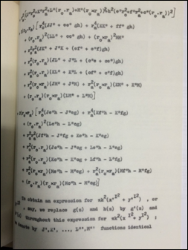
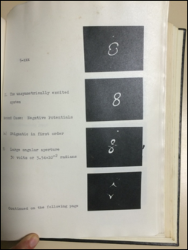
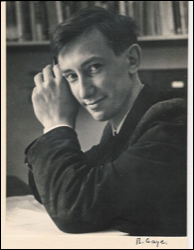
Figure 1 : Pictures extracted from the thesis [1]. Image circa 1965 taken at Peterhouse, Cambridge.
[1] Hawkes, P.W. The Aberrations of Electon Optical Systems in the Absence of Rotational Symmetry, PhD Thesis 1963.
[2] Hawkes, P.W. Quadrupole Optics (the Electron Optical Properties of Rectilinear Orthogonal Systems). 2013. Springer.
[3] Scherzer, O. Über einige Fehler von Elektronenlinsen Zeitschrift für Physik, 1936, vol. 101, no. 9-10. 593–603.
- Time in Cambridge (1960-1975)
He became a Research Fellow at Peterhouse. It was during this period that he began to lay the foundations for what would become his monumental work. He published a series of technical articles describing how to correct aberrations in quadripolar and octopolar lenses [4]. Without these calculations, today's high-resolution microscopy would not exist. From the outset, he realised that knowledge in charged particle optics was fragmented. He then began a colossal work of compilation and synthesis, with a rigour of terminology that would make him famous [5].
He also taught this science to the fortunate students of Cambridge (see figure 2).
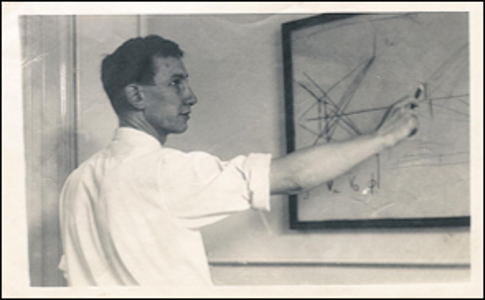
Figure 2 : Peter during a charged particle optics lecture at Cambridge.
[4] Hawkes, P. W. The geometrical aberrations of general electron optical systems II. The primary (third order) aberrations of orthogonal systems, and the secondary (fifth order) aberrations of round systems. Philosophical Transactions of the Royal Society of London. Series A, Mathematical and Physical Sciences. 1965. 257, 523–552
[5] Hawkes, P. W. Electron Optics and Electron Microscopy. (Taylor & Francis, London, 1972).
- Time in Toulouse (1975-2024)
During this period, Hawkes tackled a difficult mathematical problem centered around the correction of aberrations. In order for microscopes to see atoms, it was necessary to understand how aberrations of magnetic lenses influence image formation. He developed methods using transfer matrices to calculate electron trajectories with unparalleled accuracy [6]. Thanks to the advent of digital technology, he was one of the first to understand that the future of microscopy lay not only in hardware, but also in software using digital processing [7].
Around 1985 until 2000 under his leadership, research in charged particle optics performed in Toulouse focused on coherence theory and the phase problem. Indeed, an electron microscope records the intensity of electrons, but loses the ‘phase’ information, which also contains a large amount of information about the material under observation [8]. Hawkes worked on algorithms to recover this phase, paving the way for electron holography, a major speciality of CEMES today, the laboratory that succeeded the LOE.
In 1983, his work was recognised by the CNRS with the silver medal. He became director of LOE in 1987 before the laboratory become the CEMES.
[6] Hawkes, P. W. A matrix demonstration of the relations between the asymptotic aberration coefficients of round lenses corresponding to different object positions. 1984. Ultramicroscopy 15, 227–231.
[7] Hawkes, P.W. Computer-aided calculation of the aberration coefficients of microwave cavity lenses part I, 1983. Optik, vol. 63, n° 2, pp. 129-156.
[8] Hawkes, P. W. The quicksands between wave and geometrical charged particle optics. Nuclear Instruments and Methods in Physics Research Section A: Accelerators, Spectrometers, Detectors and Associated Equipment. 1995. 363, 215–219.
- Edition and erudition
Peter Hawkes' work in Toulouse extends far beyond the laboratory. He has transformed the city into a hub for global scientific literature of charged particle optics.
1. Advances in Imaging and Electron Physics series of books
Since the beginning of his career in Toulouse, he has edited this series of books for Academic Press (Elsevier). Each volume is a compendium of knowledge to which he invites the world's leading researchers to contribute. For the community, being published by Hawkes in Toulouse is a mark of distinction.
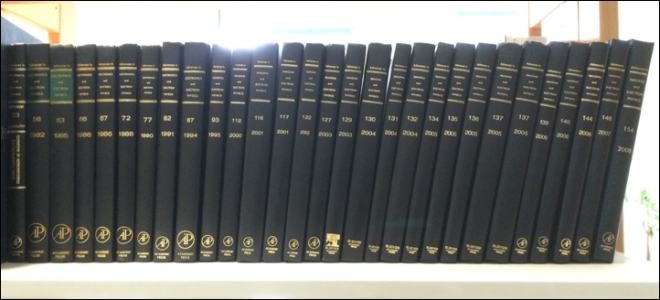
Figure 3 : "Advanced in imaging and electron physics" book series.
2. Writing the "Great Work"
It was in Toulouse that he produced the four volumes of "Principles of Electron Optics" Together with Erwin Kasper (2022). This monumental work is often compared to the work done by Born and Wolf with the book "Principle of Optics" [1]. These two works are absolute foundation that every doctoral student in optics must possess [2].
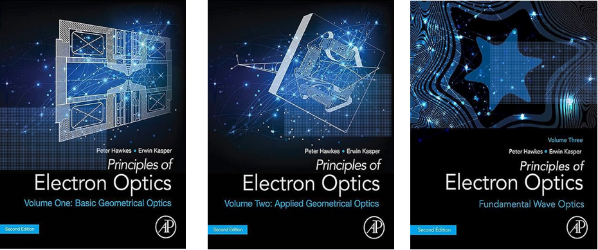
Figure 4 : "Principle of electron optics" the masterpiece of charged particle optics [2].
[1] Born, M., Wolf, E. & Bhatia, A. B. Principles of Optics: Electromagnetic Theory of Propagation, Interference, and Diffraction of Light. 2019. Cambridge University Press, Cambridge.
[2] Hawkes, P. W. & Kasper, E. Principles of Electron Optics. Volume 1: Basic Geometrical Optics. 2018. Elsevier, London.
3. Unifier of the community
Peter Hawkes played a key role in unifying the various microscopy societies. He was a bridge between the French school, the Anglo-Saxon and German approaches.
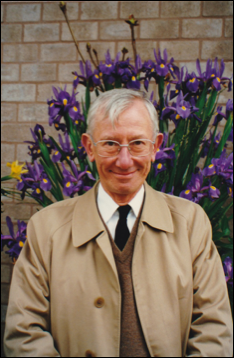
Figure 5 : Peter William Hawkes (1937-2024)